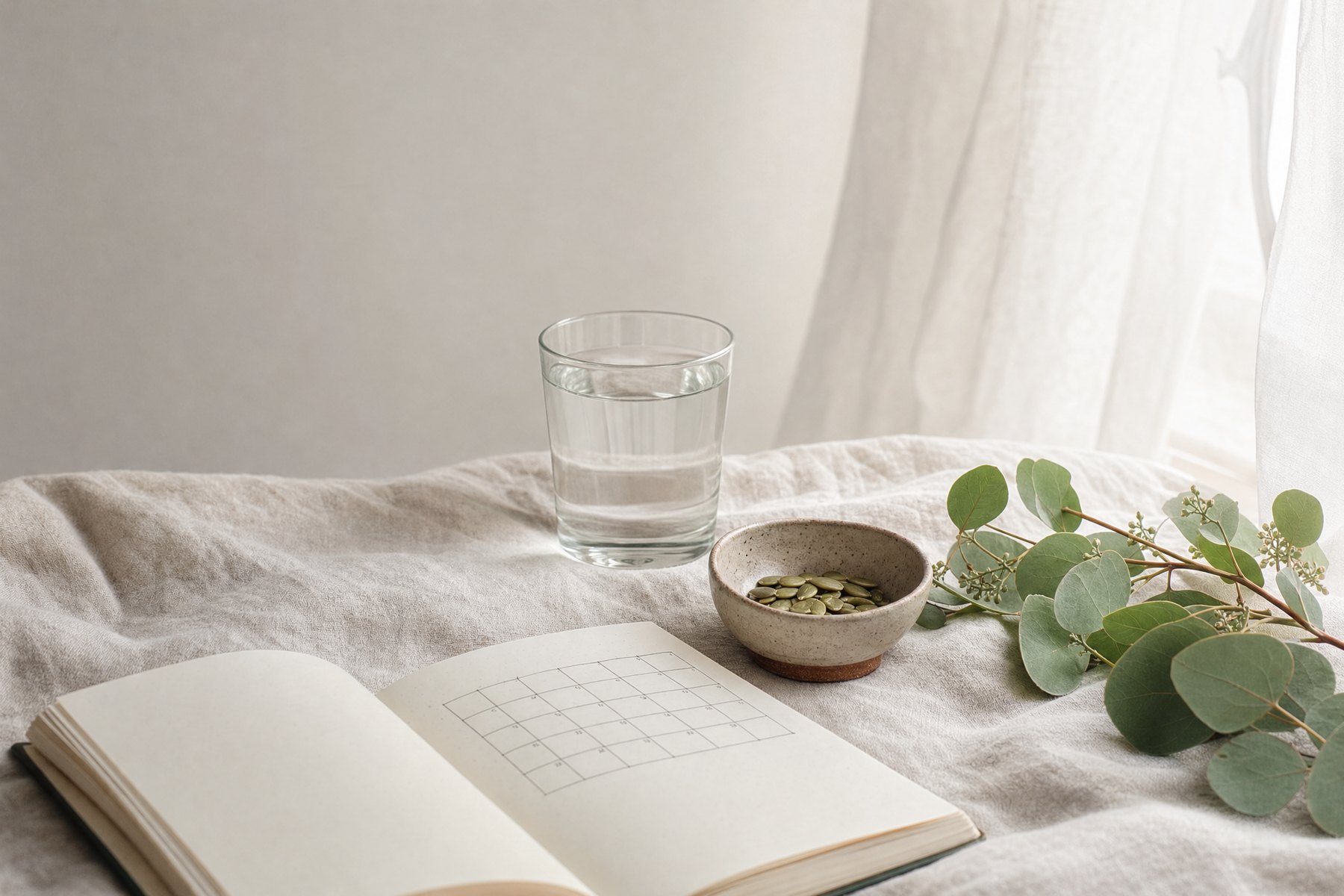
Cycle-tracking notebook, water and pumpkin seeds on linen — PMS and PMDD naturopath support

PMS & PMDD

For some women a few days each month are simply uncomfortable. For others, the two weeks before a period take over their life. Seeing a naturopath about PMS or PMDD starts with why your cycle affects you the way it does — and what can be changed.

Is PMS just something you have to put up with?

No. Irritability, bloating, low mood and cravings before a period are common, but they are not something you have to endure, and they are not “just hormones”. They have identifiable drivers — hormone balance, nutrient status, blood sugar, stress load — and most of those can be investigated and changed, alongside your GP.

Irritability, breast tenderness, bloating, low mood, cravings, headaches, a short fuse with the people you love most — and then a period arrives and it lifts. Most women who come to us have been told some version of “that’s just hormones”, offered the pill, and sent on their way.

It is not “all in your head”, and you do not have to learn to live with it. Premenstrual symptoms are common, but common is not the same as normal, and it is certainly not the same as untreatable. Premenstrual dysphoric disorder (PMDD) sits at the severe end of that spectrum, where the mood changes are disabling rather than annoying — and it deserves to be taken seriously rather than dismissed.

Our approach is to stop treating the symptom list as the problem and start asking what is driving it.
Magnesium and B6 rich wholefoods arranged in small dishes on slate

What causes PMS and PMDD?

There is rarely one cause. Premenstrual symptoms usually come from a combination of hormone balance across the cycle, how well the body clears oestrogen, nutrient status, blood sugar swings, stress load and gut health. Two women with identical symptoms can have completely different drivers, which is why we start with a detailed history and, where it will change the plan, testing — rather than handing everyone the same supplement.

The drivers we most often find behind premenstrual symptoms:

  • Hormone balance across the whole cycle — the relationship between oestrogen and progesterone in the luteal phase, not a single number on a single day.
  • How your body clears hormones — liver detoxification pathways and bowel function both affect how much oestrogen is recirculated rather than removed. Xenoestrogens add to that load from the outside.
  • Nutrient statusmagnesium, B6, zinc, iron and vitamin D are all involved in hormone metabolism and neurotransmitter production, and all are commonly low.
  • Nervous system load — chronic stress changes how the body responds to normal hormonal shifts. This is often the difference between a difficult week and an unbearable one.
  • Blood sugar regulation — the cravings-crash-irritability pattern in the luteal phase is frequently a glucose problem wearing a hormonal costume.
  • Gut health and inflammation — both influence oestrogen clearance and mood.
  • Thyroid and iron status — worth ruling out, because both mimic premenstrual fatigue and low mood.

If you have never been shown how the menstrual cycle actually works, that is a good place to start.

How does a naturopath help with PMS and PMDD?

By treating the drivers rather than the symptom list. Once we understand your pattern, the plan is built around your cycle rather than applied over the top of it: cycle mapping, targeted nutrition, herbal medicine, dietary work and nervous system support, alongside your GP. Depending on what we find, that can include:

  • Cycle mapping — tracking symptoms against cycle days so we can see whether the pattern is genuinely luteal, and measure whether the plan is working.
  • Targeted nutritional support, prescribed at practitioner strength and matched to what your history and testing show — not a general women’s multivitamin.
  • Western herbal medicine, chosen for your presentation and reviewed for interactions with anything else you take.
  • Dietary work aimed at blood sugar stability, fibre for oestrogen clearance, and the nutrients you are actually short of. Some of the simplest changes make the most difference.
  • Nervous system support, because in severe premenstrual mood symptoms this is often where the biggest change comes from.
  • Working alongside your GP if you are on the pill, an antidepressant or another prescribed medication. We do not ask anyone to stop a medication — that is a conversation for you and your doctor, and we will check for interactions either way.

Because cycles are monthly, we usually review after two to three cycles. That is long enough to see a real trend rather than one good month.

Book an Appointment

We are open 6 days per week, by appointment only. Book an appointment online via our online booking link.

When is it more than PMS?

Severe premenstrual mood symptoms — despair, rage, hopelessness or thoughts of self-harm that arrive in the luteal phase and lift with your period — are not something to work through alone or to manage with supplements only. If that describes your experience, please involve your GP or a mental health professional as well. Jean Hailes has a clear overview of PMS and PMDD if you want a second source. We do not diagnose PMDD and we do not treat it — diagnosis and treatment sit with your GP or mental health practitioner. Our role is to work alongside that care, addressing the nutritional and hormonal drivers, not to replace it.

It is also worth ruling out other explanations. Thyroid problems, iron deficiency, perimenopause and endometriosis can all produce a symptom pattern that looks premenstrual. Period pain that is getting worse deserves investigation in its own right.

Common questions about seeing a naturopath for PMS and PMDD

What is the difference between PMS and PMDD?

Both occur in the luteal phase — the roughly two weeks between ovulation and your period — and both resolve once bleeding starts. The difference is severity and impact. PMS is uncomfortable; PMDD is disabling, with mood symptoms severe enough to disrupt work, study and relationships. PMDD is a recognised diagnosis, and it is worth having it named rather than minimised.

Can a naturopath help with PMDD?

Yes. A naturopath can address several of the factors that influence how strongly you react to normal hormonal shifts — nutrient status, blood sugar regulation, oestrogen clearance and nervous system load — and for severe PMDD we work alongside your GP or mental health practitioner rather than instead of them.

Do I need testing, or can we just start treatment?

Sometimes the history is clear enough to start. We recommend testing when it will genuinely change the plan — for example when thyroid, iron or a hormone pattern needs ruling in or out. We would rather test than guess.

How long before a PMDD plan from a naturopath makes a difference?

Most women see some change within two to three cycles, which is why we review on that timeframe. Nutrient repletion in particular takes months rather than weeks.

I am on the pill. Is that a problem?

No. Many of our patients are. It changes what we look at and what we prescribe, and we check for interactions. Any decision about the pill itself is one for you and your doctor.

Get in touch

If your cycle is running your month, it is worth finding out why — and a naturopath who understands PMDD is a good place to start. Our naturopaths and nutritionists consult from Geelong CBD and Drysdale, in person or by telehealth, six days a week. Book an initial consultation and we will start by listening.

Book an Appointment

We are open 6 days per week, by appointment only. Book an appointment online via our online booking link.

Latest Posts on Hormones and Your Cycle