
By Morgan Helmling, BHSc (Naturopathy), Living Holistic Health — how to work out which foods cause eczema in your child, without shrinking their diet.
Almost every parent of a child with eczema arrives at the same suspicion, usually somewhere around week three. Something they are eating is doing this.
Naturally, it is a reasonable thought. Eczema flares, and flares look like reactions, and reactions look like food. So the fridge gets audited, the dairy comes out, then the eggs, then the tomatoes, and a fortnight later there is a shorter list of foods and a child whose skin is doing exactly what it was doing before.
Instead, this article is about doing that properly. Which foods genuinely matter, how to find out without shrinking a child’s diet, and what the gut has to do with any of it.

Do foods cause eczema, or just trigger it?
At first, the distinction sounds academic. In practice it changes everything you do next.
Eczema starts in the skin barrier
To begin with, eczema is fundamentally a barrier condition. The skin does not hold moisture properly, and it lets more of the outside world through than it should. Genetics play a large part in that, which is why eczema runs in families alongside asthma and hay fever.
Still, food does not create that barrier problem. Food can, in some children, make an already inflamed situation worse. Therefore the useful question is not “which foods cause eczema” but “is food a trigger for this child, and if so which one”.
How allergy, intolerance and foods that cause eczema differ
Specifically, three different things get muddled here. True food allergy is an immune reaction, often immediate, and it can be serious. In contrast, food intolerance is a digestive or metabolic reaction without that immune mechanism. Food-triggered eczema sits somewhere in between, usually delayed and much harder to pin down.
Because they are different, they need different approaches. In practice, guessing rarely separates them.
Which foods cause eczema flares most often?
Generally, where food is genuinely involved, the usual suspects are reasonably consistent.
The foods that cause eczema most often
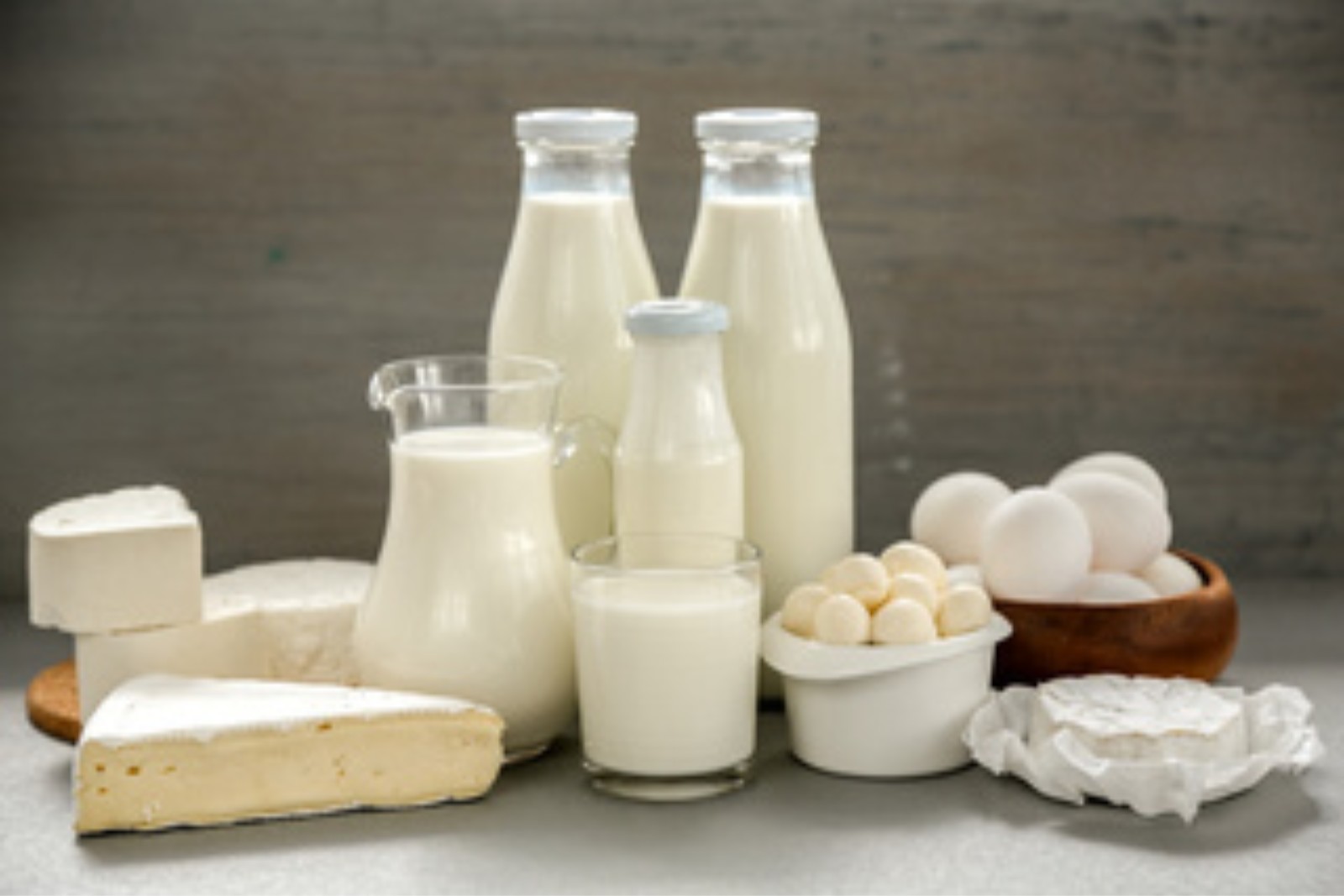
As a rule, cow’s milk and egg come up most frequently in children, followed by wheat, soy, peanut and tree nuts. In infants under two, milk and egg account for the majority of genuinely food-triggered cases.
Notably, that list is short. In fact, it is much shorter than the list most families end up avoiding.
Why the list of foods that cause eczema keeps growing
Moreover, eczema waxes and wanes on its own, which makes home testing unreliable. If you remove a food during a natural improvement, that food gets blamed. Meanwhile, the next flare gets blamed on the next food, and the list grows without anything ever being proven.
Importantly, this is not a failure of attention. Rather, it is a genuinely difficult signal to read without structure.
Why testing cannot tell you which foods cause eczema
Certainly, this surprises people, and it is one of the more important things in this article.
What allergy tests actually measure
To start with, skin prick tests and specific IgE blood tests measure sensitisation, not allergy. For instance, a child can test positive to a food they eat happily every week. Australian population data from the HealthNuts study has mapped how test size relates to genuine allergy, and a result below those thresholds is not a diagnosis.
Consequently, results only mean something when read against what the child actually eats and how they actually react.
Test-guided elimination did no better than guessing
In fact, a 2022 systematic review of ten trials looked directly at this. It found no credible difference between elimination guided by testing and elimination based on suspicion alone.
That finding should make everyone cautious about a test being sold as the answer. Testing has a real place, particularly where a serious allergy is suspected, and it belongs in a conversation with your GP or an allergy specialist.
Why removing foods that cause eczema can backfire
I want to spend a proper section on this, because it is the part families are least often told.
The benefit is smaller than expected
That same 2022 review found dietary elimination produced only a slight improvement in eczema severity, itch and sleeplessness. Its authors described the benefit as possibly unimportant, and the confidence interval for the main result reached all the way down to zero.
Where the real risk sits
A review of 298 children found that 19 per cent of those with food-triggered eczema, who had never had an immediate reaction before, developed one after starting an elimination diet. In addition, thirty per cent of those new reactions were anaphylaxis. Milk and egg were the most common culprits, and test results could not predict who it would happen to.
Separately, a study of 150 toddlers found that those on restricted diets had significantly lower weight, height and head circumference, along with lower intakes of protein, calcium, iron and B12.
The tolerance problem
Above all, the mechanism behind that first finding matters. Eating a food regularly is part of how the body maintains tolerance to it. Removing it can, in some children, allow that tolerance to fade.
The landmark peanut trial made the same point from the other direction. Infants with severe eczema who ate peanut regularly had dramatically lower rates of peanut allergy at five than those who avoided it. Avoidance is not automatically the safe option.
The gut, and how it changes which foods cause eczema symptoms
This is where naturopathic thinking has something genuine to offer, provided we are honest about how much is established.
Leaky gut and the skin
Leaky gut, or intestinal permeability, describes a gut lining that is letting more through than it should. It is measurable in research settings, and markers such as zonulin are used to assess it. Common leaky gut symptoms parents describe alongside eczema include bloating, irregular stools, reflux, poor appetite and frequent tummy pains.
The appealing idea is that a more permeable gut allows more immune activation, which then shows up in the skin. That idea is plausible and it is actively researched. However, it has not been proven to cause eczema, and no trial has yet shown that improving gut permeability clears a child’s skin. So I hold it as a working picture rather than a diagnosis.
What the microbiome research shows
Children with eczema do tend to have a different mix of gut bacteria to children without. That has been found repeatedly. What has not been established is the direction — whether the bacteria shape the eczema, or the eczema and its treatment shape the bacteria.
Where probiotics sit
Honestly, further down the list than most people expect. The most rigorous review, covering 39 trials, found probiotics probably make little or no difference to eczema symptoms as parents rate them. Some individual trials find benefit as an add-on to standard care. If you want the detail, I have written about probiotics for eczema separately.
Histamine, and whether high-histamine foods cause eczema
Of course, histamine is the part of this topic families most often find on their own, so it deserves a straight answer.
What is known and what is not
For a start, histamine is involved in itch, and some foods are naturally high in it while others prompt its release. Plenty of parents report that reducing high-histamine foods settles their child’s skin, and I have seen that in clinic.
What does not exist is the evidence to match. There is no validated blood test for histamine intolerance, and there has never been a randomised trial of a low-histamine diet in childhood eczema. The one randomised paediatric trial in a related itch condition found no significant benefit. So this belongs in the category of a supervised, short-term experiment, not an established mechanism.
How to trial it safely
If you are going to try it, do it deliberately. Choose a defined period of two to four weeks rather than an open-ended change. Keep protein, calcium and iron sources in the diet throughout. Reintroduce foods one at a time and write down what happens. Above all, do it with a practitioner or your GP involved, particularly for a child under five.
A food diary can quietly become something less healthy if it runs for months. This is a short observation tool, not a diet, and nothing comes out permanently without a good reason.
LOW HISTAMINE DIET
(not all kids react the same way to all of these foods. Some of them may be ok, however, you may want to pull some of them out if they eat them frequently, to see if you get an improvement.
FOODS TO AVOID
- Cocoa
- Kombucha
- Fruit juice
- Vegetable juice
- Fermented soy (miso, soy sauce, tempey, tamari)
- Foods that contain yeast
- Legumes
- Peanuts
- Aged cheese
- Bananas
- Citrus (lemon, lime, grapefruit, orange, mandarin)
- Fermented and dried fruits
- Strawberries
- Raspberries
- Kiwi
- Papaya
- Pineapple
- Plums
- Bone broths
- Cured and smoked meats
- Additives (colours, stabilisers, taste enhancers, MSG, flavourings)
- Chocolate
- All fermented foods
- Liquorice
- Preservatives (benzoates, sulphites)
- Shellfish
- Tinned fish
- Smoked and cured fish
- Eggplant
- Pickle vegetables
- Tomatoes
- Spinach
- Chilli
- Capsicum
- White potato
Low Histamine Recipe – NOMATO SAUCE RECIPE
I’ve popped the following recipe below for you, as a substitute for the family favourite bolognaise.
Give it a try, and hopefully they’ll enjoy it, and have less itchy skin too!
Ingredients:
- 6 carrots, peeled and cut into chunks
- 1 beetroot, peeled and cut into chunks
- 1 large onion, cut into quarters
- 3 celery sticks cut into chunks
- 1 bay leaf
- 1 tsp Italian herbs
- 1/2 tsp of salt
- 1 1/2 cups of water
Directions
Put everything in a covered pot, bring to the boil, reduce heat to simmer until veges are soft.
Take out bay leaf and discard, blend with a bar mixer well until smooth and use as you would tomato sauce.
Thank you, best of luck
From Morgan
Nutrients that support the skin from the inside
Before removing anything, it is worth asking what is missing. Skin is expensive tissue to build and repair, and shortfalls show up there early.
Zinc and vitamin A
Equally, both are involved in skin repair and immune regulation. Zinc is found in pumpkin and sesame seeds, chickpeas and spinach. Vitamin A comes from carrots, apricots, eggs and butter, and from the coloured vegetables children generally eat least of.
Vitamin C
Similarly, vitamin C supports wound healing and is found readily in broccoli, capsicum and berries. It is also one of the easiest things to lose from a diet that has been narrowed by elimination.
Vitamin D
Lower vitamin D is associated with more severe eczema, and correcting a genuine deficiency is sensible, particularly through an Australian winter. That said, the trials in children specifically are inconsistent, and one 2023 analysis found no benefit from supplementing when eczema was the outcome. Check rather than assume.
What actually helps most, according to the evidence
If we are being led by evidence rather than by instinct, the unglamorous things win.
Moisturising, relentlessly
For example, a Cochrane review of 77 studies found that moisturiser used alongside active treatment outperformed active treatment alone. Flares became less frequent, and the median time between them stretched from 30 days to 180. Families also needed less steroid cream.
Reassuringly, the same review found no reliable evidence that one moisturiser beats another. Frequency matters more than price.
Where steroid creams sit
There is a great deal of frightening material online, so let me be direct. A 2024 Cochrane analysis of 291 studies and nearly 46,000 participants found potent topical steroids among the most effective treatments available, with no evidence of increased skin thinning in short-term use. They were also the class least likely to cause skin reactions.
Used as prescribed, they are safer than their reputation, and nothing in this article replaces them.

How to find out which foods cause eczema for your child
In short, a structured approach.
Get the baseline right first
Before changing the diet, get the skin routine consistent for two to four weeks. Moisturiser twice daily, prescribed treatment used as directed. A great many suspected food reactions disappear once the barrier is properly supported, simply because there are fewer flares to explain.
Then change one thing at a time
One food. Two to four weeks. A written record of skin, sleep and mood. Then a proper reintroduction, because a food is not a confirmed trigger until you reintroduce it and the reaction returns.
Keep a practitioner in the loop
Especially for children under five, and especially if more than one food is involved. If a serious allergy is suspected at any point, that goes to your GP or an allergy specialist rather than staying at home.
When to see your GP
Please see a doctor promptly if the skin is weeping, crusted or looks infected, if your child is unwell, or if there has ever been an immediate reaction to a food — swelling, vomiting, hives or breathing difficulty. The same applies if the eczema is not responding to prescribed treatment, or if nobody in the house is sleeping.
Above all, asking for medical help is not a failure of natural medicine. It is what ruling out red flags looks like.
Frequently asked questions about foods that cause eczema
What foods cause eczema to flare up?
Generally, where food is genuinely involved, cow’s milk and egg are most common in young children, followed by wheat, soy, peanut and tree nuts. However, most children with eczema do not have a food trigger at all, and the barrier problem is doing the work.
Do dairy foods cause eczema in babies?
Cow’s milk is one of the more common triggers in infants, but it is far from universal. Removing dairy from a baby’s or a breastfeeding mother’s diet has real nutritional consequences, so it is worth confirming properly with your GP rather than assuming.
Can removing foods that cause eczema make it worse?
It can. In one review of 298 children, 19 per cent developed new immediate food reactions after starting an elimination diet, and 30 per cent of those were anaphylaxis. Restricted diets have also been linked to lower growth measures. Short, supervised trials with reintroduction avoid most of this.
Is my child’s eczema caused by leaky gut?
Undoubtedly, intestinal permeability is real and measurable, and it is an active area of research in skin conditions. What has not been shown is that it causes eczema or that improving it clears the skin. It is worth considering as part of a wider picture, not as a standalone explanation.
Should I try a low-histamine diet?
In general, only as a short, supervised trial, and only with reintroduction planned from the start. There has never been a randomised trial of low-histamine eating in childhood eczema, so any confident claims about it are ahead of the evidence.
How long before I know if a food is a problem?
Two to four weeks of removal, then a proper reintroduction. If the skin does not clearly improve during removal and clearly worsen on reintroduction, that food is probably not the issue and should go back in.
Where to from here
If your child’s diet has been shrinking and their skin has not been improving, that is worth a proper conversation before anything else comes out. You can read more about our approach to skin health, or book an appointment at our Geelong or Drysdale clinic, or by telehealth.
Related: our Gut Issues and Food Allergies, Babies and Toddlers and Eczema pages explain how we approach these conditions alongside your doctor.
References
Evidence on foods that cause eczema and dietary elimination
- Oykhman P, et al. Dietary elimination for the treatment of atopic dermatitis: a systematic review and meta-analysis. Journal of Allergy and Clinical Immunology: In Practice. 2022. https://doi.org/10.1016/j.jaip.2022.06.044
- Chang A, et al. Natural history of food-triggered atopic dermatitis and development of immediate reactions in children. Journal of Allergy and Clinical Immunology: In Practice. 2016. https://doi.org/10.1016/j.jaip.2015.08.006
- Low DW, et al. Food restriction, nutrition status, and growth in toddlers with atopic dermatitis. Pediatric Dermatology. 2020. https://doi.org/10.1111/pde.14004
- Bath-Hextall F, et al. Dietary exclusions for improving established atopic eczema in adults and children. Allergy. 2009. https://doi.org/10.1111/j.1398-9995.2008.01917.x
- Du Toit G, et al. Randomized trial of peanut consumption in infants at risk for peanut allergy. New England Journal of Medicine. 2015. https://doi.org/10.1056/NEJMoa1414850
- Peters RL, et al. Natural history of peanut allergy and predictors of resolution in the first 4 years of life. Journal of Allergy and Clinical Immunology. 2015. https://doi.org/10.1016/j.jaci.2015.01.002
- Sweeney A, et al. Early intervention of atopic dermatitis as a preventive strategy for progression of food allergy. Allergy, Asthma and Clinical Immunology. 2021. https://doi.org/10.1186/s13223-021-00531-8
Evidence on the gut, histamine and eczema care
- Comas-Basté O, et al. Histamine intolerance: the current state of the art. Biomolecules. 2020. https://doi.org/10.3390/biom10081181
- Duelo A, et al. Study protocol for a randomized and placebo-controlled trial on a low-histamine diet and DAO supplementation. Nutrients. 2024. https://doi.org/10.3390/nu17010029
- Rios-Carlos M, et al. Immunopathogenic mechanisms in the gut-skin axis in atopic dermatitis. Gut Microbes. 2024. https://doi.org/10.1080/19490976.2024.2430420
- Makrgeorgou A, et al. Probiotics for treating eczema. Cochrane Database of Systematic Reviews. 2018. https://doi.org/10.1002/14651858.CD006135.pub3
- van Zuuren EJ, et al. Emollients and moisturisers for eczema. Cochrane Database of Systematic Reviews. 2017. https://doi.org/10.1002/14651858.CD012119.pub2
- Lax SJ, et al. Topical anti-inflammatory treatments for eczema: network meta-analysis. Cochrane Database of Systematic Reviews. 2024. https://doi.org/10.1002/14651858.CD015064.pub2
- Park JS, et al. Effect of vitamin D on the treatment of atopic dermatitis. Allergy, Asthma and Immunology Research. 2023. https://doi.org/10.4168/aair.2023.15.2.262
