
By Adrian Stone, BHSc (Nutritional Medicine), BHSc (Naturopathy), Living Holistic Health — The gut microbiome and multiple sclerosis: a September 2026 study asked whether the gut bacteria present at diagnosis can predict how MS will go. What it found, what it did not, and why your gut is not like Las Vegas.
Your Gut Is Not Like Las Vegas · Part 1 of 5
You know the line. What happens in Vegas stays in Vegas. Your gut is not like that.
Things move from your gut right around your body. Bacterial by-products cross the gut wall into the bloodstream. Immune cells trained in the gut lining travel to the brain, the joints, the skin. An issue in your gut does not stay politely behind the velvet rope.
This is the first in a series on conditions you would never file under “digestive” — multiple sclerosis, ADHD, Parkinson’s, depression, autoimmune thyroid disease — where the gut keeps showing up anyway. The gut microbiome and multiple sclerosis come first because a September 2026 study has been doing the rounds with a headline it doesn’t quite earn. It’s a good place to set the ground rule for the series.
If you have just been diagnosed, the other reason to start here: you are about to be sold a lot of gut products. This series is the counterweight — what the evidence supports, and where a naturopath genuinely fits alongside your neurologist.
The ground rule: association is not cause. Every post in this series will say it. The alternative is the story I dislike most in my industry: every condition has a single hidden cause and a single fix. “Heal your gut, heal your MS” is that story wearing a lab coat. The evidence is more interesting than that, and more useful.

What Did the New Study on the Gut Microbiome and Multiple Sclerosis Actually Find?
Italian researchers sequenced the gut microbiome of 53 newly diagnosed, untreated people with MS and 55 healthy donors, followed for a year. The gut communities differed between the two groups, and a subgroup with more motor symptoms and spinal cord lesions at diagnosis showed more progression at 12 months. The authors call for validation in larger cohorts.
The study (Maglione and colleagues, EBioMedicine, September 2026) used shotgun metagenomic sequencing. That is the more detailed method: it reads all the microbial DNA rather than a single marker gene, so it sees bacteria, archaea and fungi together. Overall community structure differed between people with MS and healthy donors across all three groups of organisms.
Two things inside the paper matter more than the headline.
First, the single clinical factor most strongly linked to gut diversity in the MS group was whether they had received steroid treatment at onset. That’s a confounder sitting right in the middle of the data. Steroids change the gut. So does an MS relapse. Untangling which came first, in a one-year window, is not something 53 people can do.
Second, the two “subgroups” were defined by MRI features: lesion load, lesion location and MRI activity. Only then were their microbiomes and outcomes compared. The group that did worse at 12 months was the group that already had motor symptoms and spinal cord lesions at diagnosis. Neurologists have known for years that spinal cord involvement and motor onset carry a worse short-term prognosis. So the honest question is not “does the gut predict MS course?” It’s “does the gut add anything to what the neurologist can already see on the scan?”
This study can’t answer that yet. The authors, to their credit, don’t claim it can.
Does This Mean Your Gut Microbiome Can Predict How MS Will Progress?
Not yet. The study shows that gut differences are detectable at the very start of MS and travel with features already known to predict a rougher course. It does not show that the microbiome predicts progression independently of those features, and 53 people followed for one year is a pilot, not a prognostic tool.
That is not me being dismissive. Finding microbiome differences at diagnosis, before any disease-modifying drug has touched the gut, is genuinely useful. Most earlier work studied people already on treatment, and we know treatment itself reshapes the gut. What it gives us is a cleaner starting line. What it doesn’t give us is a test you should go and buy — and if you already have, in the first anxious weeks after diagnosis, that is entirely understandable.
Is the Gut Microbiome Really Different in Multiple Sclerosis?
Yes, consistently — but not in the simple way the popular story tells it. The largest study, 576 people with MS matched to household controls, found shifts in specific species rather than a collapse in overall diversity. A 2024 meta-analysis of 26 studies found no consistent diversity difference overall, only during active disease.
The household study
The International MS Microbiome Study, published in Cell in 2022, is the benchmark here. It compared 576 people with MS to genetically unrelated adults living in the same house — same kitchen, same dog, same water. That strips out a lot of the noise that plagues microbiome research. People with MS carried less Faecalibacterium prausnitzii and Blautia, two of the gut’s main producers of butyrate. Butyrate is a short-chain fatty acid that feeds the gut lining and calms immune activity. They also carried more of a handful of mucus-degrading species (the full list is in the paper). The microbiome also shifted in response to each disease-modifying therapy, which is why the treatment-naïve design of the new Italian study matters.
The meta-analysis
Then there’s the 2024 meta-analysis of 26 sequencing studies and 2,885 participants. No overall difference in the standard diversity indices between MS and controls. Diversity was lower during active phases and in relapsing-remitting MS. The authors found no consistent rise in “pro-inflammatory” or fall in “anti-inflammatory” genera across studies. Their conclusion is that which organisms are present matters more than how many kinds. That is a useful corrective to the “more diversity is always better” line that sells a lot of products.
The twin study
In 2017, researchers compared 34 pairs of identical twins where one had MS and one didn’t. Overall gut profiles were barely different. But then they transplanted the MS twin’s gut bacteria into mice bred to be prone to brain autoimmunity. Those mice developed disease at a significantly higher rate than mice given the healthy twin’s bacteria. Their immune cells also made less IL-10, the body’s main “stand down” signal. Identical genes, different gut, different outcome — in mice. It’s the strongest experimental hint we have that the gut is a contributor rather than a bystander. It is still a hint.
How Could Gut Bacteria Influence a Disease of the Brain and Spinal Cord?
Mostly through what they make, not what they are. Gut bacteria produce short-chain fatty acids, tryptophan metabolites and secondary bile acids that enter the blood, tune immune cells, and influence the blood-brain barrier and the brain’s own immune cells. In MS, several of these metabolites run low. No single organism is the culprit.
A review published in August 2026 by researchers at UCSF in Neurology: Neuroimmunology & Neuroinflammation lays this out well. The recurring pattern in MS is depletion of the fibre-fermenting, short-chain-fatty-acid-producing bacteria and expansion of mucus-degrading, pro-inflammatory taxa. That pattern is mirrored in blood and spinal fluid. Short-chain fatty acids, certain tryptophan-derived compounds and secondary bile acids all run lower than in healthy controls.
Those metabolites are the couriers. They cross into the circulation and shape T-cell and B-cell behaviour. They influence how tight the gut barrier and blood-brain barrier are. Once across, they act directly on microglia, astrocytes and the cells that lay down myelin. There is also a neural route, the vagus nerve, which carries signals from gut to brain and back.
The review’s conclusion is the sentence I’d like every patient to hear before anything else about the gut microbiome and multiple sclerosis. The evidence supports coordinated disruption of the gut–metabolite axis, rather than any single pathogen, as a contributor to MS. Not the cause. A contributor. Sitting alongside genetics, low vitamin D, Epstein-Barr exposure, smoking and the rest.
If you’ve read anything I’ve written before, you’ll recognise two of my four root drivers in that paragraph: chronic inflammation and oxidative stress. The gut is one of the places they start.
What About Probiotics for Multiple Sclerosis?
The human evidence is thin and one of the most-cited trials has been retracted. A 2026 meta-analysis of 28 randomised trials across autoimmune conditions found microbiome-targeted interventions lowered inflammatory markers on average, but with extreme variation between studies. Nobody should read that as “probiotics treat MS.”
I want to be straight about this one, because it’s where the marketing gets ahead of the science. A 2017 Iranian trial reported that a probiotic capsule improved disability scores and mood in 60 people with MS. It was cited for years as the human proof-of-concept. That paper was retracted in August 2025, and a companion paper from the same group is also flagged as retracted. If someone quotes you a probiotic trial in MS, ask which one.
What’s left? A 2026 systematic review in Nutrients pooled 28 randomised trials (2,002 patients) of probiotics, prebiotics, synbiotics and faecal transplant across eleven autoimmune diseases. C-reactive protein fell (standardised mean difference −0.67) and TNF-α fell, with the strongest signals in rheumatoid arthritis, MS and inflammatory bowel disease. But heterogeneity was 80–98% — the studies disagreed with each other so much that the authors themselves labelled the pooled result exploratory rather than definitive. Strain, dose, duration and patient group all varied. That is not a recipe. It’s a research agenda.
My position: there is a mechanistic case for supporting the short-chain-fatty-acid producers in someone with MS. The safest, best-evidenced way to do that is with what you eat. Whether a specific strain adds anything on top is an open question, and the trials that would settle it haven’t been done.
What Does Vitamin D Have to Do with the Gut Microbiome and Multiple Sclerosis?
More than you’d think. Low vitamin D is a long-established MS risk factor, and a 2025 randomised trial found neurologist-prescribed high-dose vitamin D reduced disease activity in early MS — a decision for your specialist, not the supplement aisle. Vitamin D receptors also line the gut and its immune tissue. The gut and vitamin D are one immune conversation.
The D-Lay MS trial
The D-Lay MS trial, published in JAMA in April 2025, is the best vitamin D trial MS has had. In it, 316 people with a first MS-typical episode and vitamin D below 100 nmol/L were randomised to high-dose fortnightly vitamin D3 or placebo. The trial ran two years, with no other treatment. Disease activity — a relapse or new MRI lesions — occurred in 60.3% of the vitamin D group versus 74.1% on placebo, a hazard ratio of 0.66. All three MRI measures favoured vitamin D. Clinical relapses on their own did not reach significance. No serious adverse events were attributed to the supplement.
Two cautions. That was a pulse dose, prescribed and monitored by neurologists, in people selected for low vitamin D at their first episode. It is not a general recommendation and not something to self-prescribe. Vitamin D status is a blood test, and the dose that follows is a conversation with whoever is managing your MS. And it was monotherapy in people not yet on a disease-modifying drug, so what it adds on top of standard treatment is still being studied.
Why it belongs in a gut article
The vitamin D receptor is expressed heavily in the gut lining and in gut immune cells. Vitamin D status is one of the host factors that shapes which bacteria thrive. Low vitamin D and a depleted microbiome tend to travel together in MS. Nobody has yet shown that fixing one fixes the other, and I’m not going to be the one to claim it.
Does Diet Quality Matter in Multiple Sclerosis?
The observational evidence says yes, modestly and consistently. In nearly 7,000 people with MS, those with the highest-quality diets had about 20% lower odds of higher disability and of depression. A composite healthy lifestyle was linked to substantially lower odds of severe fatigue, pain and cognitive symptoms. Cross-sectional, so cause can’t be claimed.
The NARCOMS registry study, published in Neurology in 2018, scored diet quality on fruit, vegetables and legumes, whole grains, added sugar and red or processed meat. The top fifth versus the bottom fifth had 20% lower odds of higher disability (proportional odds ratio 0.80) and 18% lower odds of depression (0.82). People who also kept a healthy weight, exercised and didn’t smoke did better again. They had 31% lower odds of severe fatigue, 47% lower odds of depression and 44% lower odds of severe pain.
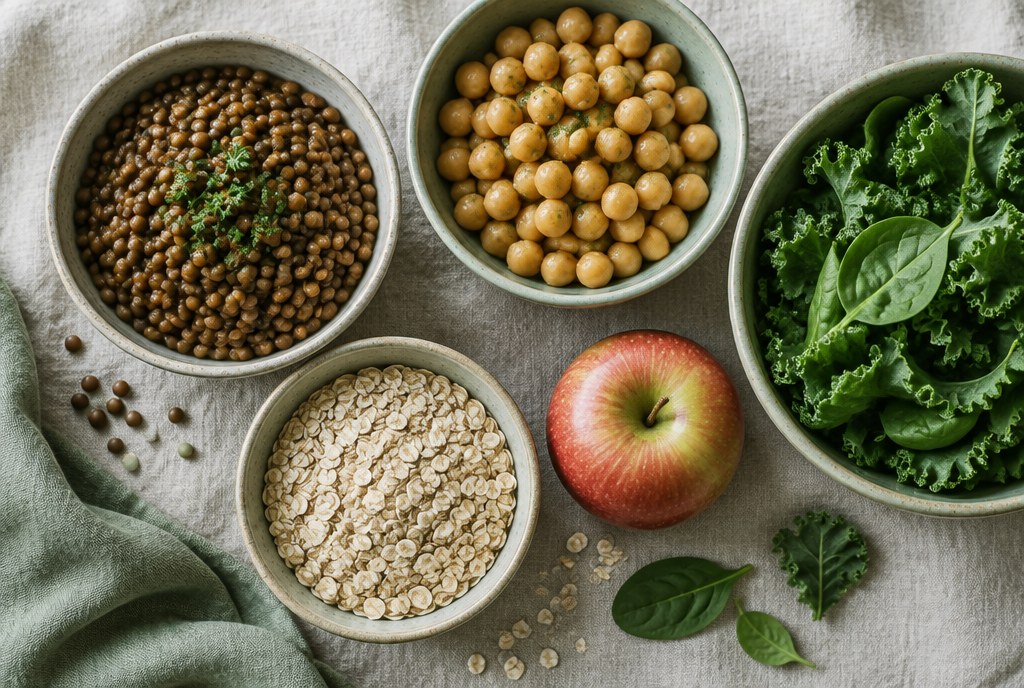
Here’s the honest caveat, and it cuts both ways: people who feel better may find it easier to eat well and exercise, so some of this runs in reverse. But the pattern lines up with the mechanism. Fibre from vegetables, legumes and whole grains is the substrate the short-chain-fatty-acid producers need — the exact organisms that run low in MS. Diet is the one lever on the microbiome that every line of evidence supports, that carries no risk, and that is yours to pull.
Should You Get Your Gut Microbiome Tested If You Have MS?
Only if the result would change what you do. My rule for any functional test is the same: if it will better inform the plan and get you a better result faster, it earns its place. For most people with MS, a detailed diet and symptom history tells me most of what a stool test would, at no cost.
Gut microbiome testing is one of my go-to functional tests, so I’m not anti-testing. But a research-grade shotgun sequence of the kind used in the Italian study is not what commercial kits deliver. Even the research version isn’t yet a validated prognostic marker; the study’s own authors say so. Where a stool test does earn its place: someone with MS who also has persistent digestive symptoms, a history of repeated antibiotics, or a pattern I can’t explain from the history alone. Then it’s a diagnostic tool, not a curiosity.
Where Does a Naturopath Fit Alongside a Neurologist in MS?
Beside them, not instead of them. We don’t diagnose or treat multiple sclerosis; that stays with your neurologist and your doctor. Our part is the nutritional, herbal and lifestyle work that sits alongside their care — the diet quality, the vitamin D status, the digestive symptoms, the fatigue and the sleep that a specialist appointment isn’t designed to cover.
In practice, that looks like a long first appointment. We build a proper timeline of when things started and what changes them, take a system-by-system history, and go through your diet and stress load. I read every report you bring. From there we work out where the nutritional and lifestyle work can support you — around your disease-modifying therapy, never in place of it. Nothing in this article is a reason to change a medication. If it raises a question, take the question to your neurologist.
We want the body to do most of the work. Our job is to create the right conditions for it.
What’s Next in This Series?
Part 2 turns to ADHD. A September 2026 review pooled 23 studies and 1.9 million people. It found that ADHD travels with 48% higher odds of gut symptoms, nearly double for constipation. Different condition, different decade of life, same rule: your gut is not like Las Vegas.
The path to progress is never linear. Neither, it turns out, is the path from the gut to the brain.
If you’re in Geelong or on the Bellarine and want the nutritional side of this looked at properly, alongside your neurologist’s care, the first appointment is where we start. Bring the reports you already have; I read all of them.

Your Gut Is Not Like Las Vegas — a series on why what happens in the gut doesn’t stay there.
Part 1: The gut microbiome and multiple sclerosis (this article)
Part 2: ADHD and gut problems
Part 3: Parkinson’s and constipation
Part 4: Depression, anxiety and the gut-brain axis
Part 5: Autoimmunity beyond MS
Part 1: The gut microbiome and multiple sclerosis (this article)
Part 2: ADHD and gut problems
Part 3: Parkinson’s and constipation
Part 4: Depression, anxiety and the gut-brain axis
Part 5: Autoimmunity beyond MS
Frequently Asked Questions
Can gut bacteria cause multiple sclerosis?
No study has shown that. The gut microbiome is consistently different in people with MS, and in mice MS-derived bacteria can trigger autoimmunity. In humans, the evidence supports the gut as one contributor among several, alongside genetics, vitamin D, Epstein-Barr virus exposure and smoking. It is not the cause.
Can a stool test tell me how my MS will progress?
Not at present. The 2026 study that prompted this article found gut differences at diagnosis that travelled with known prognostic markers, in 53 people over one year. Its authors call for validation in larger, longer cohorts before any prognostic use.
Should people with MS take probiotics?
The human trial evidence is limited, and a widely cited 2017 trial was retracted in 2025. Pooled data across autoimmune conditions show lower inflammatory markers on average with very high variation between studies. Supporting the gut through diet has the stronger evidence. Discuss any supplement with your neurologist first.
What can I actually do about my gut if I have MS?
Eat for the bacteria that run low in MS: fibre from vegetables, legumes and whole grains, less added sugar and processed meat. Have your vitamin D checked. Address digestive symptoms properly rather than living with them. And keep every one of those steps alongside, not instead of, the care your neurologist provides.
References
Research located via PubMed. All links go to the original papers.
- Maglione A, Rosso R, Tortarolo D, et al. Gut microbiome profiling at multiple sclerosis onset as a potential early prognostic marker of disease course: evidence from an observational cohort study. EBioMedicine. 2026;132:106470. https://doi.org/10.1016/j.ebiom.2026.106470
- iMSMS Consortium. Gut microbiome of multiple sclerosis patients and paired household healthy controls reveal associations with disease risk and course. Cell. 2022;185(19):3467-3486. https://doi.org/10.1016/j.cell.2022.08.021
- Zhang X, Wei Z, Liu Z, Yang W, Huai Y. Changes in gut microbiota in patients with multiple sclerosis based on 16S rRNA gene sequencing technology: a review and meta-analysis. J Integr Neurosci. 2024;23(7):127. https://doi.org/10.31083/j.jin2307127
- Berer K, Gerdes LA, Cekanaviciute E, et al. Gut microbiota from multiple sclerosis patients enables spontaneous autoimmune encephalomyelitis in mice. Proc Natl Acad Sci USA. 2017;114(40):10719-10724. https://doi.org/10.1073/pnas.1711233114
- Sánchez-Sanz A, Baranzini SE. The gut microbiome in multiple sclerosis. Neurol Neuroimmunol Neuroinflamm. 2026;13(6):e200638. https://doi.org/10.1212/NXI.0000000000200638
- Kouchaki E, Tamtaji OR, Salami M, et al. Retraction notice to “Clinical and metabolic response to probiotic supplementation in patients with multiple sclerosis: a randomized, double-blind, placebo-controlled trial” [Clin Nutr 36 (2017) 1245-1249]. Clin Nutr. 2025;53:279. https://doi.org/10.1016/j.clnu.2025.08.011
- Ashkanani G, Rob M, Yousef M, et al. The effects of microbiome modulating therapies on inflammatory markers in autoimmune disease: a systematic review and meta-analysis. Nutrients. 2026;18(4):560. https://doi.org/10.3390/nu18040560
- Thouvenot E, Laplaud D, Lebrun-Frenay C, et al. High-dose vitamin D in clinically isolated syndrome typical of multiple sclerosis: the D-Lay MS randomized clinical trial. JAMA. 2025;333(16):1413-1422. https://doi.org/10.1001/jama.2025.1604
- Fitzgerald KC, Tyry T, Salter A, et al. Diet quality is associated with disability and symptom severity in multiple sclerosis. Neurology. 2018;90(1):e1-e11. https://doi.org/10.1212/WNL.0000000000004768
This article is general information only and is not a substitute for individual medical advice. If you have multiple sclerosis, please discuss any change to your diet, supplements or lifestyle with your neurologist or GP. For private health consultation claiming, please enquire with your health fund to assess coverage. Nutrition consultations are covered by some private health funds — please check with yours first.
